

expertise
Quality Management
Quality does not happen by chance





Region
expertise
Quality does not happen by chance
In a market where quality is a key differentiator, Mérieux NutriSciences | Expert Partners helps you make your processes reliable, controllable, and scalable.
We support you in setting up, improving, and maintaining quality management systems that not only meet standards, but also contribute to more efficient operations and sustainable results.
Not a final destination, but a path for growth
Quality does not happen by itself. Strong products are the result of structured assurance and control. QA and QC together form the foundation of food safety and process control. QA focuses on structure and prevention, while QC focuses on testing, measurement, and verification.
Together, QA and QC ensure reliability, compliance, and continuous improvement. A well-designed QA and QC system aligns with daily operations, is understandable for the organisation, and is supported throughout the supply chain.



Strong QA and QC leads to fewer incidents, better performance, and increased trust from clients and auditors.
Changes in processes, personnel, or suppliers always involve risks. Without structure, they can lead to errors, complaints, or food safety incidents.
A well-designed Management of Change process helps you identify risks in advance, define measures, and ensure the right people are involved.
Management systems only become effective when they are embedded throughout the organisation, from leadership to the work floor.
A laboratory is more than a place where results are generated. It is an extension of your food safety strategy. Whether you work with external labs or manage an internal setup, processes must be reliable, reproducible, and demonstrable.
This includes quality assurance of methods, proper sample preparation, correct interpretation, and follow-up. Certification, data structure, and documentation are essential for credible reporting to clients and certification bodies.
A well-organised laboratory process turns measurement into a valuable decision-making tool.
Your organisation does not operate in isolation. Clients, auditors, suppliers, and regulators influence your policies and performance.
Stakeholder management helps you recognise interests, align expectations, and organise communication in a structured way.
This is how you build trust, support, and resilience.
The work floor is the heart of food safety. It is where policy becomes reality. Procedures, cleaning schedules, and hygiene protocols only add value when they are understood, embraced, and executed.
Collaboration between QA and operations is essential. When responsibilities are clear and operators understand why actions are required, food safety becomes a shared responsibility.
Operational control is not just about instructions, but about ownership, behaviour, and continuous improvement.
Certification, legislation, and client requirements demand structure. A quality system provides that structure when properly implemented and supported.
It should not only meet standards, but also be practical for your organisation.
We help you set up, improve, and connect systems, so that quality becomes something you organise together.
Audits are more than a requirement. They reflect how your organisation performs. Internal and external audits provide insight into what works, where risks lie, and where improvement is possible.
A strong audit programme focuses on alignment between systems and practice and provides valuable input for decision-making and learning.
Risk-based audits are a strategic tool and deliver direct value to the organisation.
Product quality is where everything comes together. Processes, people, specifications, and expectations. It is the most tangible proof of effective quality management.
Delivering quality means meeting standards and exceeding expectations through strong collaboration across teams.
Risk-based audits are a strategic tool and deliver direct value to the organisation.
Quality starts with your suppliers. Documentation, certification, and performance must be reliable and demonstrable.
A structured selection process prevents errors, improves traceability, and strengthens collaboration.
We help you build a solid assessment system and manage supply chain risks.
A complaint or deviation is not a failure, but an opportunity to improve. Structured registration and follow-up provide insight into recurring issues and underlying causes.
A strong approach takes signals seriously and translates them into improvement.
From registration to root cause analysis and corrective action, improvement becomes visible in recurring issues and processes.
Without structure in instructions, procedures, and records, errors and inconsistencies arise.
A strong document management system ensures accessibility, accuracy, and control.
We help you streamline your information management and use it strategically.
You have access to increasing amounts of data. The question is whether you use it effectively.
We help you not only collect data, but also use it to make better decisions and strengthen proactive quality assurance.
Quality is never finished. Organisations that improve continuously become more agile and efficient.
We help you embed improvement in culture, structure, and behaviour, so that you do not just adjust, but stay ahead.
Quality awareness starts with knowledge. Without well-trained employees, you cannot safeguard processes, manage risks, or successfully complete audits.
A strong quality organisation provides clarity on tasks, responsibilities, and required competencies. Structure plays a central role in this, from basic training and expert groups to toolbox sessions and knowledge platforms.
Investing in knowledge means investing in control, improvement, and trust.
Quality only becomes valuable when it is experienced that way. That is why customer satisfaction is an important starting point for quality policy.
Gathering feedback, understanding expectations, and following up on actions helps strengthen relationships, unlock market opportunities, and build trust.
Strong organisations do not see customers only as buyers, but as co-creators of quality.
.avif)
Auditing
An audit only becomes truly valuable when it is structured, closely aligned with risks and processes, and leads to concrete actions and improvements. The real strength lies in follow-up. When insights create ownership within teams, the audit becomes a steering tool.

CONTINUOUS IMPROVEMENT
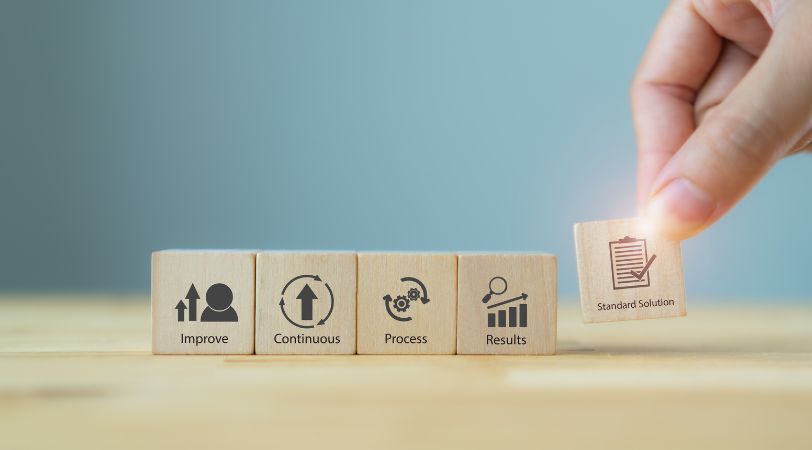
Continuous improvement means critically reviewing your processes, products, and services every day, improving them step by step, and directly linking them to concrete actions and results.
Every organisation faces its own challenges. Whether you want to meet requirements or use compliance strategically, we are here to think with you. Tell us where you are and where you want to go, and we will provide the right approach, people, and tools.
.avif)
Digital and centralised environmental monitoring
As consultants, we are not on the sidelines. We are part of your team. We bring structure to complexity, stay clear-headed in challenging situations, and deliver tangible results. Whether you need temporary support, project guidance, or specialist advice, we help you move forward.
Strategic expert
“Thanks to clear data and practical insights, we can now truly steer on impact across our value chain.”
Sustainability starts at the source

Strategic expert
“Our new facility not only marks our growth, but also reflects our commitment to quality, food safety, and sustainability. Mérieux NutriSciences | Expert Partners sets the right direction and gives us the control we need.”
Building for the future

Strategic expert
“We improve every day without losing the heart of our craft. That’s exactly what we stand for.”
Craftsmanship with a future vision

5 min read
The quality and safety of your final product do not start in production, but with the selection of your suppliers. In the food industry, supplier selection is a critical step. It forms the foundation of your operations. Are raw materials safe? Is documentation complete? Are deliveries reliable? And how does a supplier deal with sustainability, legislation, and changing requirements? Organisations that carefully select and manage their suppliers reduce risks and strengthen their supply chain.

5 min read
No organisation operates in isolation. Customers, suppliers, regulators, local communities, auditors, and partners all influence your success, quality, and continuity. The question is not whether stakeholders matter, but how well you understand them. Do you listen, engage, and anticipate, or mainly react? Stakeholder management provides direction. It helps you manage risks and unlock opportunities, not as an obligation, but as a strategic compass in a complex environment.

5 min read
Product quality is where promise meets reality. Consumers expect safety, consistency, and taste, while customers demand reliability and proper documentation. The reality? Quality lives in the details and in the daily decisions you make. Whether it concerns specifications, complaint handling, or innovation, product quality connects departments, customers, and supply chain partners. When managed well, it builds trust. When it falls short, it leads to claims, losses, and frustration.
5 min read
In an environment where quality, safety, and compliance are under pressure, change is inevitable. New suppliers, process adjustments, staff changes, or technological developments all introduce risks. Without clear control, changes can lead to unintended consequences, errors, and disruptions. That is why Management of Change is essential. It ensures that changes are implemented in a controlled way, risks are assessed in advance, and the right people are involved before the impact is felt.

5 min read
Every analysis you receive, from allergen testing to migration analysis, is only as reliable as the system behind it. Laboratory management is about more than analysing samples. It is about structuring, safeguarding, and optimising processes that are critical to food safety, quality, and decision making. Strong laboratory management ensures reliable results, minimises errors, and maximises the value of data. It starts with compliance, but extends to continuity and performance.

5 min read
In the food industry, everything revolves around trust. Trust that products are safe, compliant with legislation, meet customer requirements, and align with your own quality standards. That trust does not happen by itself. It is built through quality assurance and quality control, the structure and practice used to manage, improve, and secure processes. QA and QC are not standalone functions. They are a combination of policies, checks, records, verifications, and culture. When these elements are properly aligned, they make quality demonstrable and food safety robust.

5 min read
In an industry where trust is essential, listening to your customer is not a formality. It is a strategic choice. Satisfied customers stay, recommend your organisation, and challenge you to improve. Customer satisfaction therefore goes beyond an annual survey. It is about systematically collecting signals, identifying trends, and improving based on what truly matters to your customers. When customers feel heard, their trust grows and so does your organisation.
5 min read
In a world of certifications, standards, and processes, one truth remains. When something goes wrong, you need to know quickly and resolve it sustainably. Complaints and deviations are valuable signals. They show where systems fall short, where expectations are not met, and where improvement is needed. But only if you take them seriously. A complaint that is not addressed will be repeated. A deviation that is not understood will return.

5 min read
Whether it concerns procedures, work instructions, certificates, or inspection checklists, quality depends on having the right information, at the right time, in the right place. Without proper document management, errors occur, audits become stressful, and compliance relies on chance rather than structure. A well organised document management system brings clarity, consistency, and continuity for everyone involved in food safety and quality.

5 min read
Having data is one thing. Knowing what to do with it is another. Data is everywhere. In records, checklists, audits, and quality measurements. But only when data is translated into insights and those insights into action does it create value. This requires more than a smart tool. It requires structure, mindset, and vision. At Mérieux NutriSciences, we see data usage not as an IT topic, but as a way of thinking. A way to learn from deviations, anticipate risks, and move from controlling quality to actively steering it.

5 min read
Change is inevitable. Raw materials vary in quality, teams evolve, regulations become stricter, and expectations continue to rise. Organisations that actively respond to these changes remain strong. Those that wait fall behind. Continuous improvement is not a project or a protocol. It is a way of thinking and acting. It enables organisations to learn, adapt, and grow stronger through change. Not because it is required, but because it creates value for customers, employees, and the future.
.jpg)
5 min read
Audits are more than a mandatory exercise or preparation for certification. They are the mirror of your system. They are the moments when you do not just verify compliance, but discover where improvement is needed. Well structured audits create clarity, identify risks, and strengthen your organisation’s ability to improve. They reveal what works and what does not, making them an essential part of any quality system.
Schedule a meeting or get in touch with us directly.
Discover how to make quality management clear and workable within your organisation and schedule a meeting with one of our specialists.
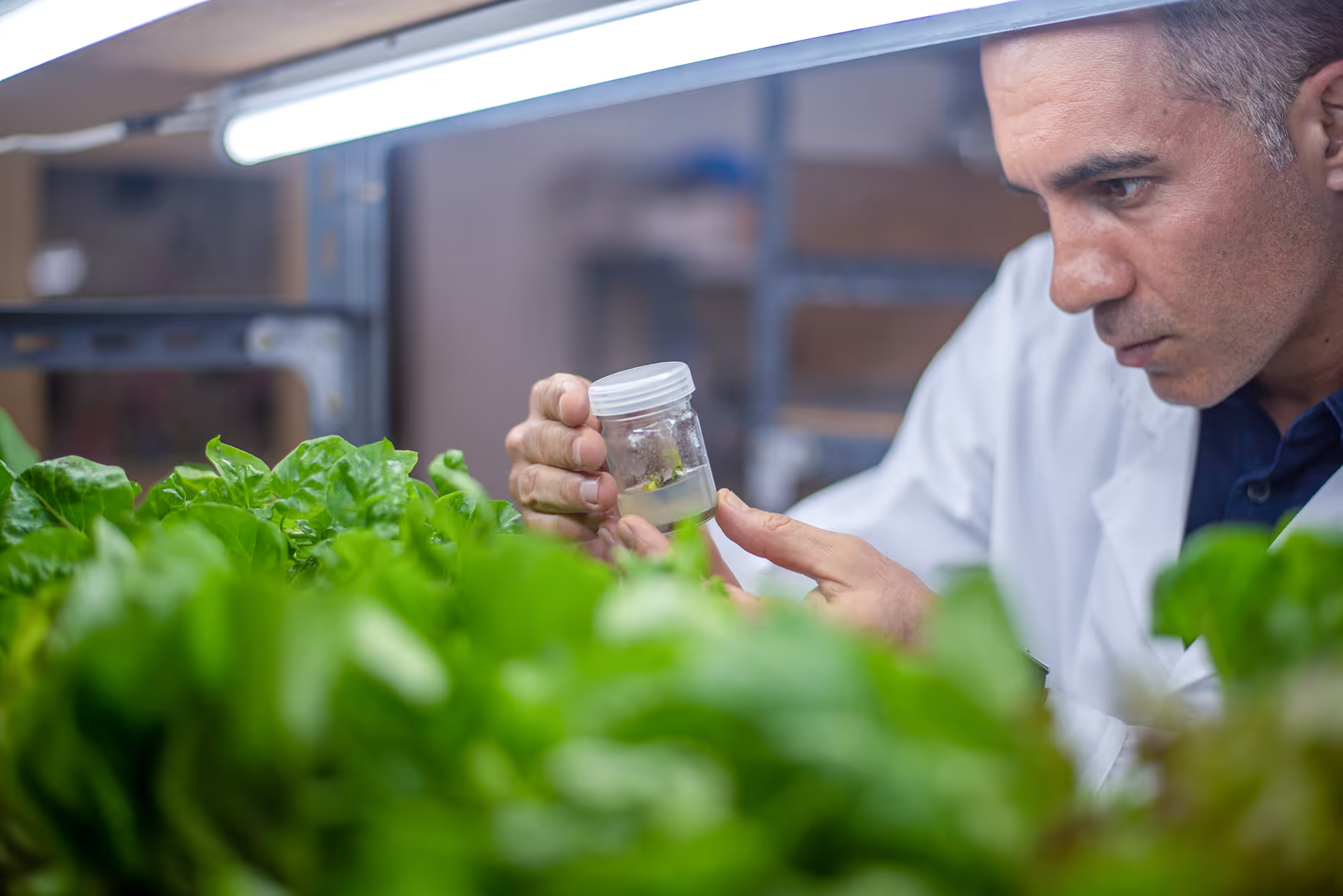
Safe products are the foundation of trust.
Sustainable business is no longer a choice, but a necessity.
Confidence starts with structure.

Labels are your calling card, but also a legal minefield.

The best protection for your product and your reputation.