





Strategic guidance in a complex world
Be ready for the new standard in packaging legislation.
Apply AI in QA today.

Ragna Tielen

Senior Consultant Sustainability

In December 2024, I joined Mérieux NutriSciences | Expert Partners as a Senior Consultant Sustainability. With a passion for food and a strong belief that a sustainable lifestyle is essential, I am committed both professionally and personally to contributing to a better world.

My career started in operational roles, where I gained valuable hands on experience. In recent years, I have further specialised in sustainability management from a management position within QESH. I see that the urgency for companies to integrate sustainability into their operations is increasing rapidly. This is driven by societal challenges, supply chain requirements, and increasingly strict legislation. At the same time, many organisations still have questions about where to start and often lack the knowledge and capacity to move forward.

My ambition is to support companies in making sustainable choices that benefit both their future and that of society. Collaboration and partnership are essential in this process.

Knowledge

Related blogs

5 min read

Responsibility beyond your own operations

Your product is only as fair, safe, and sustainable as the supply chain behind it. From agriculture to logistics, from procurement to packaging, people are involved at every step. Their working conditions shape your reputation. Customers, supply chain partners, and regulators increasingly expect organisations to take responsibility for workers across the supply chain. This includes working conditions, human rights, fair wages, and social dialogue. Not as an optional ambition, but as part of due diligence, legislation, and ESG reporting.

5 min read

Control over your most valuable resource

Water is one of the most essential resources in the food industry and one of the most vulnerable. Scarcity, consumption, pollution, and rising costs require organisations to manage water more consciously, efficiently, and transparently. Water management is therefore not just a technical condition. It is a strategic priority. Whether it concerns usage, discharge, or reuse, insight and action are essential for continuity, compliance, and sustainability.

5 min read

From waste stream to valuable resource

Food that is wasted is more than a missed opportunity. It is a direct cost, a loss of resources and labour, and a risk to sustainability and brand reputation. Food waste and waste management affect multiple parts of the organisation, from production planning and logistics to procurement and marketing. The need to manage waste streams efficiently and responsibly is becoming more urgent, driven by legislation, customer expectations, and increasing resource scarcity.

5 min read

Transparency in origin, responsibility for impact

Deforestation is one of the main drivers of biodiversity loss and climate change worldwide. The European Union is now addressing this structurally through the EU Deforestation Regulation. From the end of 2024, products such as cocoa, soy, palm oil, coffee, rubber, beef, and wood can only enter the European market if they are demonstrably not linked to deforestation. For organisations, this means gaining full visibility of supply chains, managing risks, and structurally documenting data. Not only for compliance, but also for credibility.

5 min read

Embedding sustainability in structure and behaviour

Sustainability is not a project. It is a vision that needs to be organised, embedded, and made measurable. Not only to comply with legislation, but to create meaningful impact for people, the environment, and your organisation. A sustainability or ESG management system integrates sustainability into your structure. It creates alignment, ensures continuity, and makes it possible to track, adjust, and improve performance in a measurable way.

5 min read

From measuring to reducing, from intention to impact

Climate change is no longer an abstract issue for the future. It is a concrete challenge of today. Customers, supply chain partners, and regulators are setting higher expectations for transparency, action, and measurable results. Whether it concerns CSRD reporting, Science Based Targets, or customer specific questionnaires, organisations must understand their impact and act on it. Effective climate policy does not start with communication. It starts with measurement and the willingness to take responsibility for emissions.

5 min read

Trust is built through choices

Responsible business goes beyond what you produce or sell. It is also about how you operate. Governance in sustainability is about behaviour, transparency, integrity, and accountability in decision making, across the supply chain and within your organisation. In a time of increasing societal expectations, regulation, and reporting requirements, organisations must do more than comply. They must demonstrate that their actions align with their values. Topics such as anti corruption, diversity in leadership, and business ethics are becoming essential in building trust with customers, partners, employees, and society. Trust begins with how you manage responsibility, power, and people.

5 min read

Healthy, engaged, and future ready

People shape your organisation. How you support them in terms of health, safety, workload, and development directly impacts quality, continuity, and reputation. Within sustainability, the role of employees is becoming increasingly important. What once focused on compliance with labour regulations is now evolving into a strategic focus on wellbeing, engagement, and long term employability. Organisations that invest in their people build trust, strengthen engagement, and improve performance. Not only because it is required, but because it delivers results.

5 min read

Making what matters visible

Sustainability without proof is only ambition. In a time where customers, supply chain partners, and regulators increasingly demand transparency, sustainability reporting is the way to show where your organisation truly stands. From basic reporting in platforms such as EcoVadis or ImpactBuying to full integration into annual reports according to ESRS guidelines, reporting is becoming an essential part of business operations. Strong reporting means providing direction, demonstrating performance, and driving improvement.

5 min read

From awareness to behaviour, from ambition to action

Sustainability is no longer a side ambition. It has become a critical success factor in the food industry, driven by legislation, customers, employees, and society. But policies alone do not create change. Real impact starts when people think, decide, and act differently. A sustainability culture ensures that ESG goals do not remain on paper, but come to life in practice, in strategy and in behaviour, in meetings and on the work floor.

5 min read

What you claim must be proven

In a market that demands sustainability, claims are used more frequently and examined more critically. Terms such as environmentally friendly, climate neutral, or responsibly produced create expectations among consumers, customers, and regulators. A claim only has value when it is accurate. Without proper substantiation, even well intended messages can lead to reputational damage, legal risks, or loss of trust. Regulators are increasingly active, and new European legislation is strengthening requirements. Communicating sustainability is therefore not just about telling your story. It is about proving what you deliver.

5 min read

From packaging obligation to sustainable advantage

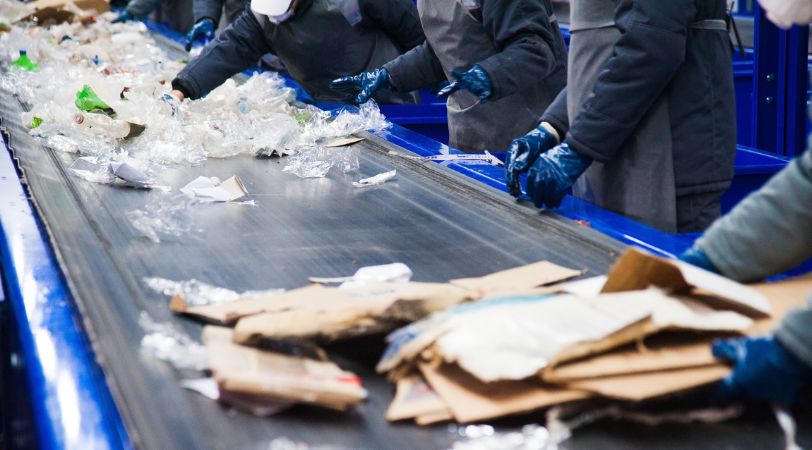
The linear economy, take, make, dispose, is increasingly being replaced by a circular approach. For good reason. Resources are finite, waste is no longer acceptable, and regulations are raising the bar for what you produce and package. Circularity is not an idealistic ambition. It is a practical necessity. With upcoming legislation such as the Packaging and Packaging Waste Regulation, what is optional today will soon become mandatory. Organisations that manage their packaging and material flows effectively will not only be compliant, but also competitive, credible, and future ready.